
Medical Transportation Insurance for Wheelchair Vehicle Exposures

9:00am - 5:00pm Mon-Fri
Will Reply in 15min*
Running a wheelchair-accessible transport service means accepting a type of risk most commercial auto policies weren't built for. Every ramp deployment, every securement strap, and every passenger transfer creates an exposure that standard fleet insurance simply doesn't address. Wheelchair-accessible vans now
represent roughly 43.7% to 46.2% of the NEMT market, making them the single largest vehicle segment in non-emergency medical transportation. That scale means insurers are paying closer attention to this niche, and so should you. If your fleet includes even one wheelchair van, the insurance conversation changes dramatically. The exposures are different, the claims are different, and the consequences of being underinsured hit harder. Getting the right medical transportation insurance for wheelchair vehicle exposures isn't just a compliance checkbox. It's the difference between surviving a serious claim and shutting your doors.
Understanding Wheelchair Vehicle Exposure in NEMT
The NEMT industry has grown steadily as aging populations and Medicaid expansion drive demand for accessible rides. But growth brings scrutiny, and wheelchair transport carries a distinct risk profile that separates it from standard passenger transport. A sedan taking an ambulatory patient to a dialysis appointment presents a fraction of the liability that a wheelchair van does during the same trip.
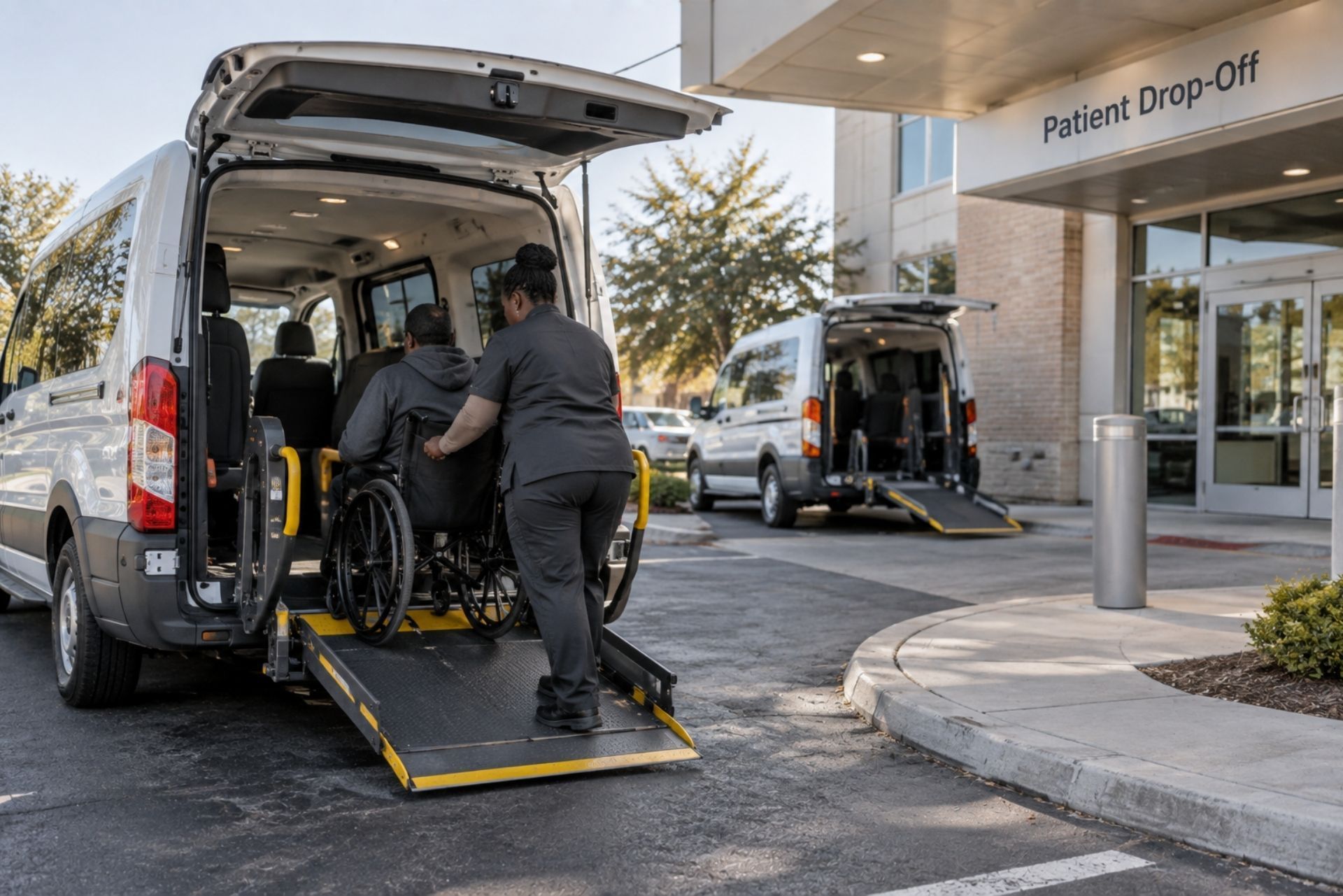
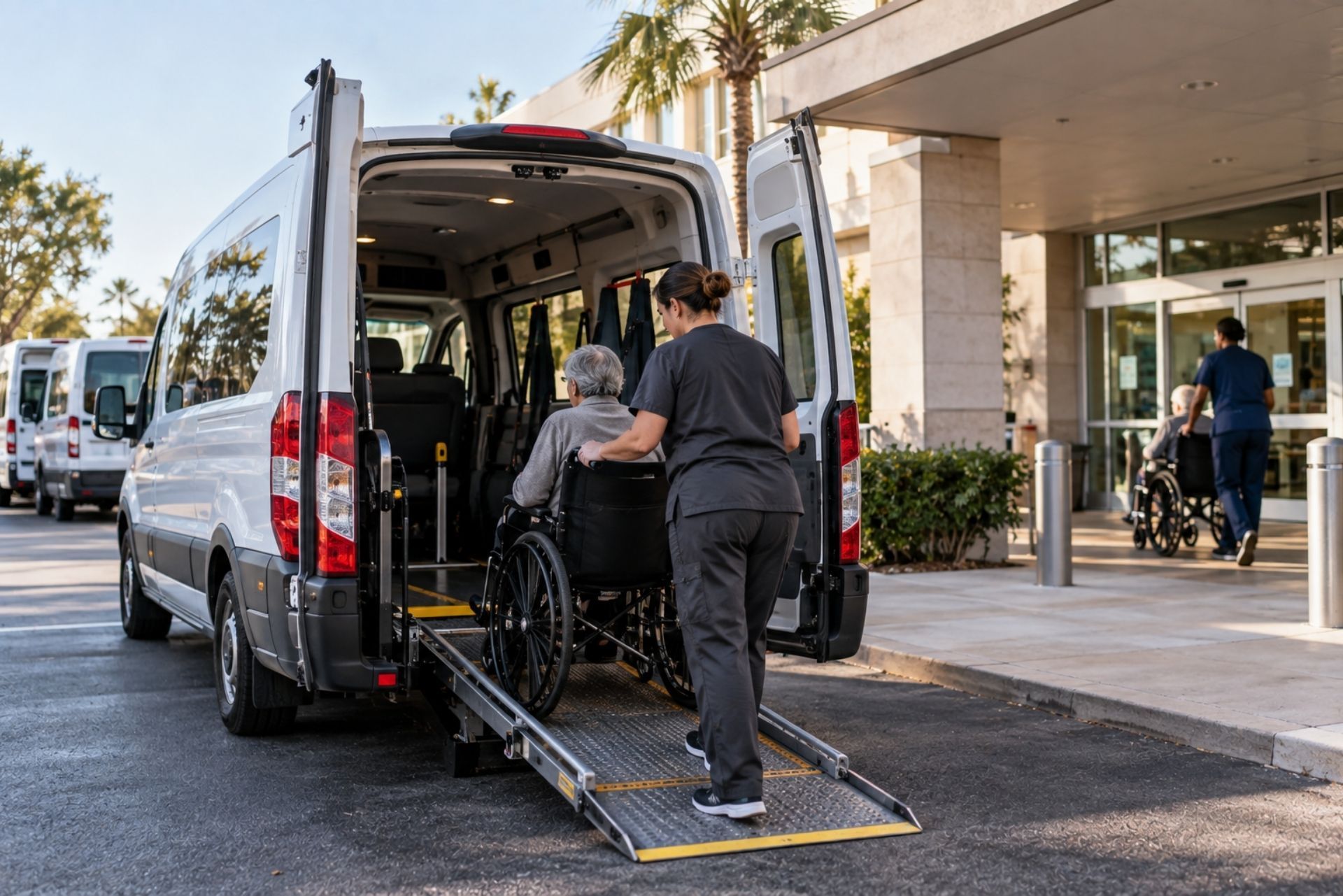
The physical act of loading and unloading a wheelchair-bound passenger introduces exposure points that don't exist in conventional transport. Hydraulic lifts can fail. Securement systems can loosen mid-transit. Ramps can become slippery in wet conditions. Each of these scenarios can result in serious bodily injury claims, and juries tend to award significant damages when vulnerable passengers are harmed.
The Difference Between Standard and Specialized Transportation
A standard commercial auto policy covers your vehicles for collision, comprehensive damage, and basic liability while the vehicle is in motion. That's fine for a sedan fleet. Wheelchair vans need more because the risk doesn't stop when the vehicle stops moving.
The loading and unloading phase is where many of the most expensive claims originate. A patient falls during a lift malfunction, or a wheelchair rolls backward off a ramp. These incidents happen while the vehicle is stationary, and some standard policies treat them as gray areas. Specialized NEMT policies explicitly cover the loading/unloading exposure, which is critical for wheelchair operators.
Your vehicles also carry aftermarket modifications: lifts, ramps, tie-down systems, and reinforced flooring. A standard policy may not cover the full replacement cost of these modifications after a total loss, leaving you thousands of dollars short.
Common Liability Risks for Wheelchair Van Operators
The claims that keep wheelchair van operators up at night tend to fall into predictable categories. Knowing them helps you buy the right coverage.
- Passenger injury during loading/unloading: lift failures, ramp collapses, and securement errors
- Improper wheelchair securement leading to injury during sudden stops or collisions
- Driver negligence during transfers, including dropping patients or failing to lock brakes
- Vehicle modification failures, such as hydraulic lift malfunctions or corroded ramp hinges
- Third-party injuries when a deployed ramp or lift strikes a bystander
Each of these can generate claims ranging from $50,000 to well over $500,000, depending on the severity of injury and the state where the incident occurs. States with no-fault insurance rules handle these differently than tort states, so your policy structure needs to reflect where you operate.

By: David Ashton
Owner and Agent at Southern Insured
Essential Coverage Types for Wheelchair Transport
Building the right insurance program for wheelchair vehicles means layering multiple coverage types. No single policy handles everything, and gaps between policies are where operators get burned.
Commercial Auto and Hired/Non-Owned Coverage
Your commercial auto policy is the foundation. It covers liability, collision, and comprehensive damage for vehicles you own. For wheelchair vans, make sure the policy includes stated value or agreed value endorsements that account for aftermarket modifications. A van worth $35,000 at purchase might have $15,000 in lift and securement equipment installed, and you need that reflected in your coverage.
Hired and non-owned auto coverage matters if you ever rent vehicles or if employees use personal vehicles for company business. This is more common than operators realize, especially during peak demand or when fleet vehicles are in the shop. The NEMT insurance market has seen several carriers exit in recent years, which has made it harder to find competitive pricing, but skipping this coverage creates a dangerous blind spot.
Professional Liability vs. General Liability
General liability covers bodily injury and property damage that occur on your premises or as a result of your operations. Professional liability, sometimes called errors and omissions, covers claims arising from the professional service you provide, like transporting a patient to the wrong facility or missing a scheduled pickup that results in a medical emergency.
Most wheelchair van operators need both. General liability handles the slip-and-fall at your office or the damage your vehicle causes to a client's property. Professional liability covers the service failures that can result in patient harm. The catch is that some insurers bundle these, while others sell them separately, so read your policy declarations carefully.
Inland Marine for Specialized Equipment Protection
Inland marine insurance isn't about boats. It covers specialized equipment that moves between locations or is installed in vehicles. For wheelchair van operators, this means your lifts, ramps, securement systems, GPS units, and communication equipment.
A commercial auto policy might cover the vehicle itself but cap equipment coverage at a low sublimit. Inland marine fills that gap. If a hydraulic lift costs $8,000 to replace and your auto policy only covers $2,500 in equipment, you're absorbing $5,500 out of pocket. That math gets painful fast when you're running multiple vehicles.
Comparing Liability Limits and Coverage Depth
Choosing between minimum required limits and higher coverage tiers is one of the most consequential decisions you'll make. Many states require NEMT operators to carry at least $1 million in combined single limit liability, but Medicaid contracts and facility agreements often demand more.
Coverage Comparison Table: Basic vs. Comprehensive
| Coverage Area | Basic Plan | Comprehensive Plan |
|---|---|---|
| Liability Limit | $1M CSL | $1M/$3M or higher |
| Uninsured Motorist | State minimum | $1M matching |
| Medical Payments | $5,000 per person | $25,000-$50,000 per person |
| Equipment Coverage | $2,500 sublimit | Full replacement via inland marine |
| Loading/Unloading | Limited or excluded | Explicitly covered |
| Hired/Non-Owned Auto | Not included | Included |
| Professional Liability | Not included | $1M/$2M included |
| Umbrella/Excess | None | $1M-$5M excess layer |
The basic plan might satisfy your state's minimum requirements, but it won't protect you from a serious claim. A single catastrophic injury during a wheelchair loading incident can blow through a $1 million limit quickly. The
broker landscape for NEMT has shifted significantly, so working with a specialist who understands these exposures is more important than ever.
Risk Management Strategies for Accessible Vehicles
Insurance is your financial backstop, but risk management is what keeps claims from happening in the first place. Insurers reward operators who can demonstrate strong safety protocols with lower premiums and fewer coverage restrictions.
Driver Training and Securement Protocols
Your drivers are your biggest asset and your biggest liability. Every driver operating a wheelchair van should complete formal training on wheelchair securement, lift operation, and passenger assistance techniques before they ever transport a patient alone.
Training should cover four-point securement systems, proper use of lap and shoulder belts over the wheelchair, and how to verify that the wheelchair's own brakes are engaged before beginning securement. Refresher training every six months keeps skills sharp and creates a documented training history that helps defend against negligence claims. A comprehensive insurance guide for NEMT operators recommends maintaining training logs as part of your risk management file.
One thing to keep in mind: drivers should also be trained on how to handle equipment malfunctions in the field. If a lift fails mid-deployment, your driver needs to know the manual override procedure and when to call for assistance rather than improvising.
Lift and Ramp Maintenance Schedules
Mechanical failures don't happen randomly. They happen when maintenance gets deferred. Every wheelchair lift and ramp in your fleet should be on a documented inspection and maintenance schedule.
- Monthly visual inspections of hydraulic lines, electrical connections, and structural welds
- Quarterly functional testing under load conditions
- Annual professional servicing by a certified lift technician
- Immediate out-of-service tagging for any equipment that fails inspection
Keep every maintenance record. In a lawsuit, the plaintiff's attorney will ask for your maintenance history within the first round of discovery. Complete records demonstrate diligence. Missing records suggest negligence, even if the equipment was actually maintained.
Common Questions About Wheelchair Van Insurance
FAQ: What You Need to Know
Do I need separate insurance for each wheelchair van in my fleet? No, but each vehicle must be listed on your commercial auto policy with its correct VIN, vehicle type, and equipment value. Unlisted vehicles aren't covered.
Does my policy cover injuries that happen while loading a patient? It depends on your policy language. Standard commercial auto policies may exclude or limit loading/unloading coverage. NEMT-specific policies typically include it explicitly. Always verify this with your agent.
How much does wheelchair van insurance cost per vehicle? Premiums vary widely based on state, claims history, and coverage limits, but expect to pay between $4,000 and $12,000 per vehicle annually for adequate coverage. High-risk states like Florida and New York tend to be at the upper end.
What happens if my lift malfunctions and injures a passenger? This would typically trigger your commercial auto liability coverage for the bodily injury claim. If the malfunction resulted from a manufacturing defect, your insurer may pursue a subrogation claim against the lift manufacturer.
Can I reduce my premiums with safety programs? Yes. Many insurers offer discounts of 5% to 15% for documented driver training programs, dash cam installations, and preventive maintenance schedules.
Do Medicaid contracts require specific coverage limits? Most state Medicaid programs require minimum liability limits of $1 million, and some require $1.5 million or higher. Check your state's NEMT provider agreement for exact requirements.
Making the Right Choice for Your Fleet
Wheelchair transport insurance isn't something you can set and forget. Your coverage needs to evolve as your fleet grows, as regulations change, and as the insurance market shifts. The carriers willing to write NEMT policies today may not be the same ones available next year, and pricing can swing dramatically based on industry loss trends.
Start by auditing your current policies against the exposures outlined above. Look specifically for gaps in loading/unloading coverage, equipment sublimits, and professional liability. If you're carrying only basic limits, run the numbers on what a serious injury claim would cost you out of pocket.
Work with a broker who specializes in medical transportation, not a generalist who writes the occasional commercial auto policy. A specialist understands how wheelchair vehicle exposures differ from standard fleet risks and can structure a program that actually protects your business. The right coverage for your wheelchair fleet isn't the cheapest option. It's the one that keeps you operating after the worst day your company could have.
About The Author:
David Ashton
As Owner and Agent at Southern Insured, I’m passionate about helping families and businesses in South Carolina find coverage that truly fits their needs. With a background in accounting and years of experience as an independent agent, I value the freedom to recommend what’s best for each client. I enjoy spending time with my wife and children, volunteering at my church, and exploring everything the Upstate has to offer.


Personal Insurance Solutions to Protect Your Self & Family
MANAGE YOUR PERSONAL RISK







We love our clients
Over 270+ 5-Star Reviews on Google!

Sarah Gibbs
Personal Insurance Client

Couldn't be happier! If you're looking for home insurance. look no further, The Southern Insurance Group is a great place to get insurance. They really go above and beyond helping you find the best bang for your buck. We own a rental business and a construction company, First Choice Constructors, and Rachel did a great job helping our company find exactly what we needed. Even when her phone was broken, Rachel sent texts and emails communicating clearly and efficiently. She's a true gem to The Southern Insurance Group. It's a pleasure doing business with them.

Melissa F.
Personal Insurance Client
Aaron Brooks at this agency is the best agent I’ve ever worked with. He’s very knowledgeable, and he patiently listens to what I need. He tailors a package to those needs without me ever wondering if I’m being sold something just for the agency to make money. I came back to him when my insurance needs changed recently because I knew he’d give me sound advice based on my specific situation and concerns. I know I’m in good hands. Thank you, Aaron.

Cristal N.
Personal Insurance Client
Rachel was very helpful, answered all our questions, talked to the salesman we were buying the car from, and had everything ready to go for a totally new policy within an hour.
The next day we had our older car added to the policy as well, it was quick, easy and friendly. We will be doing all our future car insurance needs through Rachel.

Sabrina C.
Personal Insurance Client
David Mosely was so helpful! He walked me through my policy and my options and truly could not have been more helpful. I don't know anyone else who would say they enjoyed their experiences trying to find insurance, but with his help I not only got insured, but learned about exactly what I am paying for.

Bruce B.
Personal Insurance Client
Angela Miller did a above and way beyond what was expected to resolve a Florida DMV license issue. Unbelievable amount of work (e.g. twelve attachments with very professional emails) with an incompetent DMV. David Manning continued to support that effort as well, with no benefit to the company, but great benefit to the customer. Highly recommend this agency for insurance.

Stephanie M.
Personal Insurance Client
Working with David was amazing! He explained different coverage options and what they all meant which allowed us to make informed decisions based on our needs. His knowledge around insurance is phenomenal and he’s a fun person to talk to. I highly recommend!!
Commercial Insurance Solutions to Protect Your Business
THE BEST INSURANCE COVERAGE FOR YOUR BUSINESS






Industries We Serve
WE PROTECT THESE BUSINESS IN SOUTH CAROLINA, NORTH CAROLINA, & GEORGIA
Contractors
Covers liability, property damage, and worker's compensation for contractors.
Restaurants
Protects against property damage, liability, and business interruption for restaurants.
Real Estate Investors
Safeguards investment properties from damages, liability, and income loss.
Insurance News and Insights
BLOG UPDATES





Support, answer and help, get in touch
Address office
5 Century Dr #130, Greenville, SC 29607
810 Dutch Square Boulevard, Suite 123
Columbia, SC 29210
Mailing Address
PO Box 202 Greenville, SC 29602
Greenville, SC
864-626-6181