Rented Equipment and Continuing Expense Coverage for South Carolina Contractors: The Complete Guide to Rental Agreements, Loss of Use, Physical Damage, Deductibles, and Costs
See How We're Different
or call us: 864-626-6181
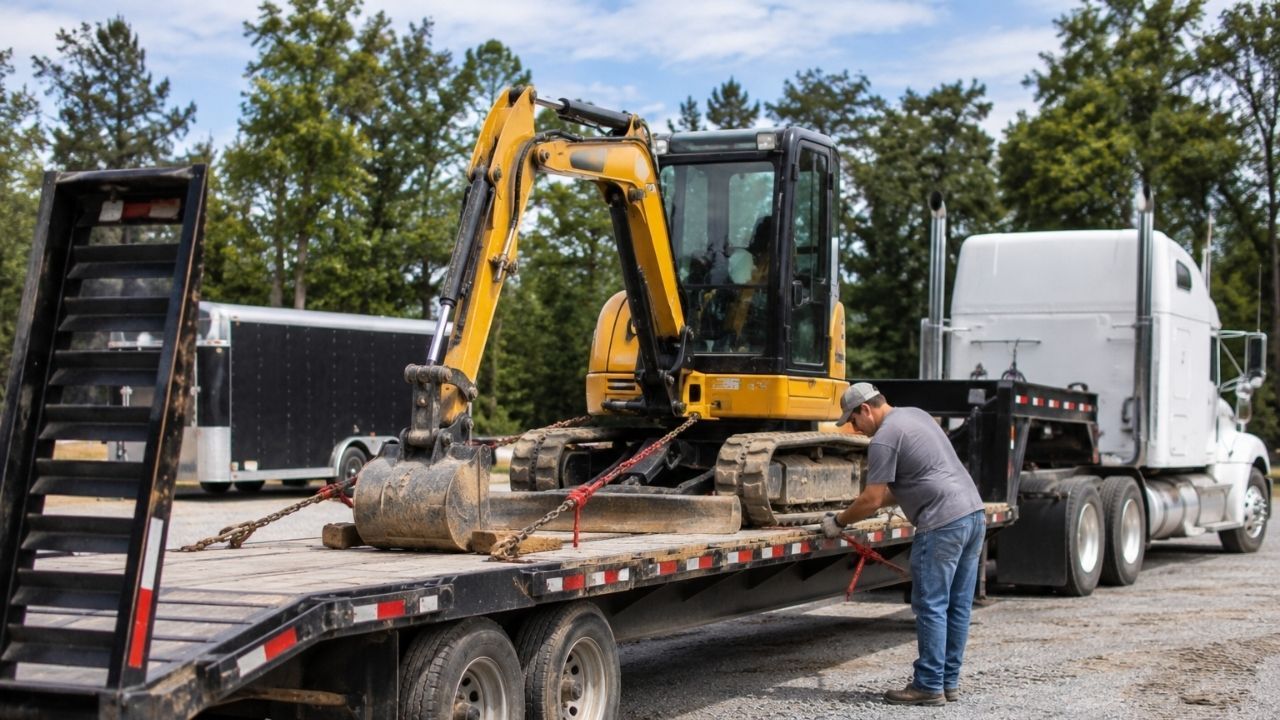
You've just signed for a 30,000-pound excavator at a rental yard off I-26. The counter clerk slides over a contract, points to a box labeled "Damage Waiver," and asks if you want it. You have about ten seconds to decide, and most contractors guess. That guess can cost a small Upstate sitework outfit more than a month's profit if the machine tips into a retention pond.
This guide covers rented equipment and continuing expense coverage for South Carolina contractors. It explains what the paperwork means, where the coverage gaps sit, and how deductibles and premiums play out on a real job budget. It's written for general contractors, excavation crews, roofers, and specialty trades who rent gear often enough that one bad claim would hurt.
The Essentials of Rented Equipment Coverage for SC Contractors
Many contractors believe their general liability policy covers a rented skid steer. It doesn't. CGL policies exclude damage to property in your "care, custody, or control," and a rented machine on your job site fits that description exactly.
The coverage you need usually comes from an inland marine policy, often called a contractor's equipment floater. The catch is that standard equipment floaters only cover owned assets. Rented gear isn't included unless a specific rented/leased equipment endorsement has been added. A Charleston framing contractor with a $250,000 floater on his own trucks and lifts can still have zero protection on the telehandler he rented last Tuesday.
A complete rented equipment program generally includes three pieces:
- Physical damage coverage: pays to repair or replace the rented machine after collision, overturn, fire, theft, vandalism, or weather.
- Continuing expense or loss of use coverage: pays the rental fees you still owe while the damaged machine sits in the shop.
- Rental reimbursement: pays for a substitute machine so your crew keeps working.
That third item gets confused with the second one all the time. Continuing expense pays the rental company for its downtime. Rental reimbursement pays for your replacement. They protect different parties, and a policy can include one without the other.
The market is growing, so the issue will keep coming up. The U.S. equipment rental industry is projected to reach $83.5 billion in 2026, a 3.6% increase over the prior year. More contractors are renting instead of buying, and more rental contracts are landing on desks without anyone reading the liability clauses.
Decoding Rental Agreements and Insurance Requirements
Rental contracts are written by the rental company's lawyers to protect the rental company. That's not cynical, it's just how the document works. Before you sign, find four clauses: the indemnification clause, the insurance requirements, the damage and loss provisions, and the loss of use language.
Most national and regional rental houses will ask for a certificate of insurance naming them as loss payee on your inland marine policy and additional insured on your general liability. Some want specific limits, often a minimum per-item value that matches the machine's replacement cost. If your rented equipment limit is $50,000 and you rent a $140,000 mini excavator, you're carrying $90,000 of the risk yourself.
South Carolina also adds a cost line that catches out-of-state contractors. The state imposes a 2.5% heavy equipment rental fee on qualified property rented for 365 days or less. That fee must be itemized separately and is subject to sales tax. "Qualified" equipment means mobile construction, earthmoving, or industrial equipment not permanently affixed to real property. Budget for it on bids, and know it's a tax, not an insurance charge.
Physical Damage and the Burden of Proof
Most rental agreements make you responsible for any damage beyond "normal wear and tear" from the moment the equipment leaves the yard until it's checked back in. That last part matters. If you drop a boom lift at the site gate on Friday and the rental company doesn't pick it up until Monday, you're on the hook for whatever happens over the weekend.
The burden of proof usually falls on you. If the yard finds a cracked bucket tooth, a torn seat, or a hydraulic leak at return, they'll bill you unless you can show the damage existed before. Rental companies also bill at retail repair rates, plus administrative fees. A $200–$400 hose part can arrive as a $1,100–$1,400 invoice once labor, shop fees, and pickup charges are added [https://heavydutyjournal.com/setting-competitive-shop-labor-rates/].
Loss of Use and Continuing Expense Obligations
This is the clause that surprises contractors the most. When a rented machine is damaged, the rental company loses revenue while it's being repaired. Most contracts let them bill you for that lost rental income, often at the full daily or weekly rate, until the machine is back in service.
Picture a Greenville paving contractor whose rented roller is damaged in a fire. Parts take six weeks. At a weekly rental rate of $2,105, that's $12,630 in loss of use charges on top of the repair bill. Without a continuing expense coverage provision in your policy, you pay it directly. Ask your agent whether your endorsement covers loss of use, what the daily cap is, and how many days it pays.
Comparing Rental Center Damage Waivers vs. Inland Marine Policies
The damage waiver at the counter isn't insurance. It's a contractual promise by the rental company to waive some or all of your responsibility for damage, in exchange for a fee typically added as a percentage of the rental charge. The waiver language varies widely between companies, and many exclude theft, negligent operation, overloading, or damage caused by an untrained operator.
One misconception causes real harm: contractors assume the waiver also covers injuries or property damage the machine causes to others. It doesn't. Equipment rental Loss Damage Waivers provide no third-party liability protection. If your rented trencher cuts a gas line and damages a neighbor's foundation, the waiver does nothing for you. That claim goes to your general liability policy.
| Feature | Rental Damage Waiver | Inland Marine with Rented Equipment Endorsement |
|---|---|---|
| What it is | Contract waiver | Insurance policy |
| Cost structure | Fee per rental | Annual premium |
| Theft coverage | Often excluded or limited | Usually included |
| Loss of use | Varies, often partial | Available by endorsement |
| Third-party liability | None | None (needs GL) |
| Deductible | May have hidden out-of-pocket | Set by you |
| Best for | Rare, one-off rentals | Frequent or high-value rentals |
Here's what that means for you. If you rent twice a year, the waiver may be the cheaper option, as long as you read its exclusions. If you rent every month, waiver fees add up quickly, and an annual endorsement usually costs less while giving broader coverage. Many contractors keep both: the policy as primary protection and the waiver for specialty equipment above their policy limits.
The vehicle side of rentals is changing at the Statehouse too. Bill 4101 proposes requiring the renter's insurance to be primary when a person operates a rented or leased vehicle. A separate measure, Bill 1036, would let renters agree in the rental contract that their own auto liability pays first up to its limits. These bills target vehicles, not excavators, but if your crew rents pickups or dump trucks, check where your commercial auto policy stands as they move.
Understanding Deductibles and Their Impact on Project Costs
Your deductible sets how much of every claim comes out of your project margin. A higher deductible lowers your premium, but each damaged machine then becomes a direct hit to job profitability. The right number depends on cash reserves, how often you rent, and how rough your sites are.
Consider frequency as well as size. A demolition contractor in Columbia who rents breakers and compact track loaders every week might file three small claims a year. With a $5,000 deductible, those small claims never become claims at all; the contractor pays everything. A $1,000 deductible costs more in premium but turns those scratches and broken glass into covered losses.
Rental equipment brings one extra wrinkle. Loss of use charges may carry their own waiting period or deductible, separate from physical damage. Some policies won't pay continuing expense until the machine has been out of service for 72 hours. Read both numbers before deciding your policy is cheap.
Flat Deductibles vs. Percentage-Based Structures
Flat deductibles are simple: $1,000 or $2,500 per occurrence, regardless of the machine's value. They work well for contractors renting mid-sized gear like scissor lifts, plate compactors, and mini excavators.
Percentage deductibles are calculated as a share of the equipment's insured value or the loss amount, often with a minimum. A 2% deductible on a $300,000 crawler crane means $6,000 out of pocket before coverage starts. These structures show up more on high-value schedules and in coastal counties where wind exposure drives carrier caution.
The trade-off is predictability. Flat deductibles let you build a precise contingency line into your bid. Percentage deductibles scale with your exposure, so a big machine means a big retention. If you rent large cranes or specialty drilling rigs, ask for a flat deductible quote alongside the percentage option and compare the premium difference against your worst-case loss.
Factors Influencing Insurance Premiums in South Carolina
Heavy equipment insurance typically costs 1% to 3% of the total insured value of scheduled items per year. For rented equipment, carriers often rate on your annual rental spend or the highest-value machine you'll rent instead of a fixed schedule. A contractor carrying a $200,000 rented equipment limit might fall somewhere in that range, adjusted by the factors below.
- Equipment type and value: cranes, aerial lifts, and large earthmovers rate higher than compactors and generators.
- Location: Lowcountry and coastal projects face hurricane and flood exposure, so carriers price wind and named storm risk more heavily in Beaufort, Charleston, and Horry counties.
- Theft exposure: unsecured overnight sites, especially along fast-growing corridors near Myrtle Beach and the I-85 belt, raise theft risk and rates.
- Claims history: two physical damage claims in three years can push a renewal up noticeably.
- Operator training: documented training and certification on lifts and cranes can earn better pricing.
- Security measures: GPS trackers, fenced storage, and immobilizers can reduce theft-related premium.
- Deductible choice: higher retentions lower premiums.
- Type of work: demolition, marine construction, and tree work rate higher than interior finish trades.
Shop the market. National carriers write a lot of inland marine business, but regional carriers active in the Southeast and specialty contractor programs often price rented equipment more competitively for small and mid-sized firms. An independent agent who places contractor business across several markets can compare these side by side. Bundling your floater with general liability and commercial auto through one carrier can also earn a package discount, though the size varies.
One mistake keeps showing up: contractors set a limit based on their usual rental and then rent something bigger for one job. Call your agent before picking up an unusually expensive machine. A temporary limit increase costs far less than an uninsured loss.
Navigating Claims for Damaged or Stolen Rental Gear
Speed matters. Most rental contracts require you to report damage or theft within 24 to 48 hours, and your insurance policy will have its own notice requirement. Missing either can give someone a reason to deny or reduce payment.
When something goes wrong, follow these steps in order:
- Secure the site and the machine. Stop further damage. Shut down leaking equipment and protect it from weather if you can do so safely.
- File a police report for theft or vandalism. Insurers almost always require one, and the rental company will want the report number.
- Notify the rental company in writing. Email creates a timestamp. Phone calls don't.
- Notify your agent or carrier. Give the rental contract number, machine serial number, and the date and cause of loss.
- Photograph everything. Get wide shots of the scene and close-ups of the damage.
- Request the repair estimate and loss of use calculation. Ask the rental company to put the daily rate and expected downtime in writing.
- Arrange a replacement if needed. Check whether your policy includes rental reimbursement before signing a new contract.
Expect friction over loss of use. Some rental companies bill downtime for machines that had backups sitting on the lot. Your carrier may push back on charges if the rental yard had idle inventory of the same model. That dispute is between the carrier and the rental company, but it can delay your claim, so keep your paperwork tight.
Theft claims deserve special attention. Compact equipment like skid steers and mini excavators is stolen often because it's easy to load on a trailer. If your policy requires the machine to be locked, fenced, or disabled overnight, and it wasn't, expect a coverage fight.
Documenting Equipment Condition at Pickup and Drop-off
Most rental damage disputes come down to one question: what did the machine look like when you got it? Fifteen minutes of documentation can save thousands.
At pickup, walk around the machine with your phone recording video. Narrate as you go: note the date, the rental contract number, and any existing scratches, dents, cracked glass, tire wear, or fluid leaks. Photograph the hour meter and fuel gauge. Have the yard employee sign or initial the checkout form noting any pre-existing damage, and keep a copy.
Repeat the process at drop-off, even if the rental company is picking the machine up from your site. Record the video before the driver loads it. If no one from the rental company is present, email the photos and video link immediately so you have a timestamped record. A Rock Hill roofing contractor who does this every time will win most disputes over "new" dents on returned boom lifts. The one who skips it pays every invoice.
Common Questions About Rental Equipment Insurance
Does my general liability policy cover rented equipment? No. GL policies exclude damage to property in your care, custody, or control. You need an inland marine policy with a rented or leased equipment endorsement.
Should I buy the damage waiver at the rental counter? It depends on how often you rent and what your policy covers. For occasional rentals it can make sense, but read the exclusions because many waivers don't cover theft or negligent use.
What is loss of use coverage? It pays the rental fees the rental company charges you while a damaged machine is being repaired. Without it, those downtime charges come out of your pocket.
Will the damage waiver protect me if the machine injures someone? No. Damage waivers provide no third-party liability protection. Injuries and damage to other people's property fall under your general liability policy.
How much does rented equipment coverage cost? Heavy equipment insurance typically runs 1% to 3% of insured value annually. Your actual rate depends on equipment type, location, claims history, and deductible.
Is the South Carolina heavy equipment rental fee part of my insurance? No. It's a 2.5% state fee on qualified equipment rented for a year or less, itemized on your rental invoice and subject to sales tax.
Your Next Steps for Secure Job Site Operations
Rented gear creates risk that your general liability policy won't touch. Physical damage, loss of use, and continuing expense charges all land on your company unless you've arranged coverage ahead of time. The rental counter waiver can help in narrow cases, but it's no substitute for a properly endorsed inland marine policy, and it does nothing for third-party claims.
Start this week. Pull your current equipment floater and check for a rented or leased equipment endorsement. Confirm the limit covers the most expensive machine you'll rent this year, and ask whether loss of use is included and how long it pays. Choose a deductible your cash flow can absorb several times a year, not just once.
Then build the habits that win claims: video walkarounds at every pickup and drop-off, written notice within 24 hours, and a quick call to your agent before renting anything unusually large. Good coverage pays the bill. Good documentation makes sure it does.

Recent posts