Trailer and Mobile Equipment Coverage on South Carolina Commercial Auto Policies: The Complete Guide to Scheduled Trailers, Inland Marine Versus Auto, Theft, Deductibles, and Costs
See How We're Different
or call us: 864-626-6181
A landscaping contractor in Greenville loses a $14,000 enclosed trailer from a job site on a Friday afternoon. He calls his agent expecting a check. Then he learns that his commercial auto policy covered the trailer for liability while it was hitched to his truck, but nobody ever scheduled it for physical damage. That gap is more common than most business owners think.
Trailers and mobile equipment sit in an awkward spot in insurance. Some belong on your auto policy, some belong on an inland marine form, and some can end up uncovered without anyone noticing. This guide to trailer and mobile equipment coverage on South Carolina commercial auto policies explains where each piece of equipment should go, how theft and deductibles work, and what drives your premium.
Understanding Trailer Coverage on South Carolina Commercial Auto Policies
A commercial auto policy has two main parts: liability and physical damage. Liability pays when your vehicle or trailer injures someone or damages their property. Physical damage pays to repair or replace your own equipment after a collision, fire, theft, or vandalism.
South Carolina law treats these as separate pieces. The state's insurance code defines automobile insurance to include physical damage coverage such as fire, theft, and combined additional coverage, but liability is the only part you're required to carry. Physical damage is optional, and that's where trailer gaps start.
Here's what that means for you: a trailer can be "covered" and still leave you with nothing after it's stolen. The liability side may follow the trailer automatically, while the physical damage side only applies if you specifically list the trailer and pay for it.
Liability minimums are also under review. During the 2025-2026 session, South Carolina Bill 4143 sought to raise mandatory minimum auto liability limits from 25/50/25 to 30/60/30. Most commercial operators carry far more than the state minimum anyway, and a loaded equipment trailer jackknifing on I-26 can produce a claim well past any statutory floor.
Scheduled Trailers vs. Automatic Liability Extensions
The word "scheduled" just means listed by name on your policy, usually by year, make, VIN, and value. Scheduled trailers get the coverages you choose for them. Unscheduled trailers depend on how your covered auto symbols and policy wording treat them.
On standard commercial auto forms, many smaller trailers pick up liability coverage automatically when they're attached to a covered power unit. Larger trailers usually need to be listed to get liability protection at all. The details vary by carrier and form, so read your declarations page and ask your agent which symbols apply.
When Physical Damage Coverage is Required
Physical damage on a trailer is almost never automatic. If you want the trailer repaired or replaced after a loss, you need to schedule it and select comprehensive, collision, or both.
You'll typically want physical damage coverage when:
- The trailer is financed or leased: lenders almost always require comprehensive and collision.
- Replacing it would hurt cash flow: a $25,000 gooseneck isn't something most small contractors can absorb.
- It's parked overnight at job sites: unattended trailers are prime theft targets.
- It carries specialized buildouts: shelving, generators, and wiring in a mobile service trailer add value that has to be reported.
A common client mistake: an HVAC company schedules its trucks for full coverage and assumes the trailers came along. They didn't. When a fire damaged two utility trailers at their yard, the claim was denied for both.
The 2,000 Pound Rule in South Carolina
Many standard commercial auto forms use a 2,000 pound load capacity threshold. Trailers rated at 2,000 pounds or less of load capacity are often treated as covered for liability when attached to a covered auto, even if they're not listed. Trailers above that line typically need to be scheduled.
One thing to keep in mind: this is a policy form convention, not a South Carolina statute. Your carrier's wording controls. Also note that the threshold refers to load capacity, not the trailer's empty weight, and it applies to liability only. A 1,500 pound capacity landscape trailer still has zero theft protection unless you schedule it for physical damage.
Choosing Between Commercial Auto and Inland Marine
Inland marine insurance covers property that moves: tools, equipment, and some trailers. Despite the name, it has nothing to do with boats in modern practice. For many businesses, it's a better home for equipment that rarely touches a public road.
The right placement depends on how the item is used. Get it wrong and you can pay for overlapping coverage, or worse, fall into a gap where each policy points to the other.
Mobile Equipment and the Roadway Use Test
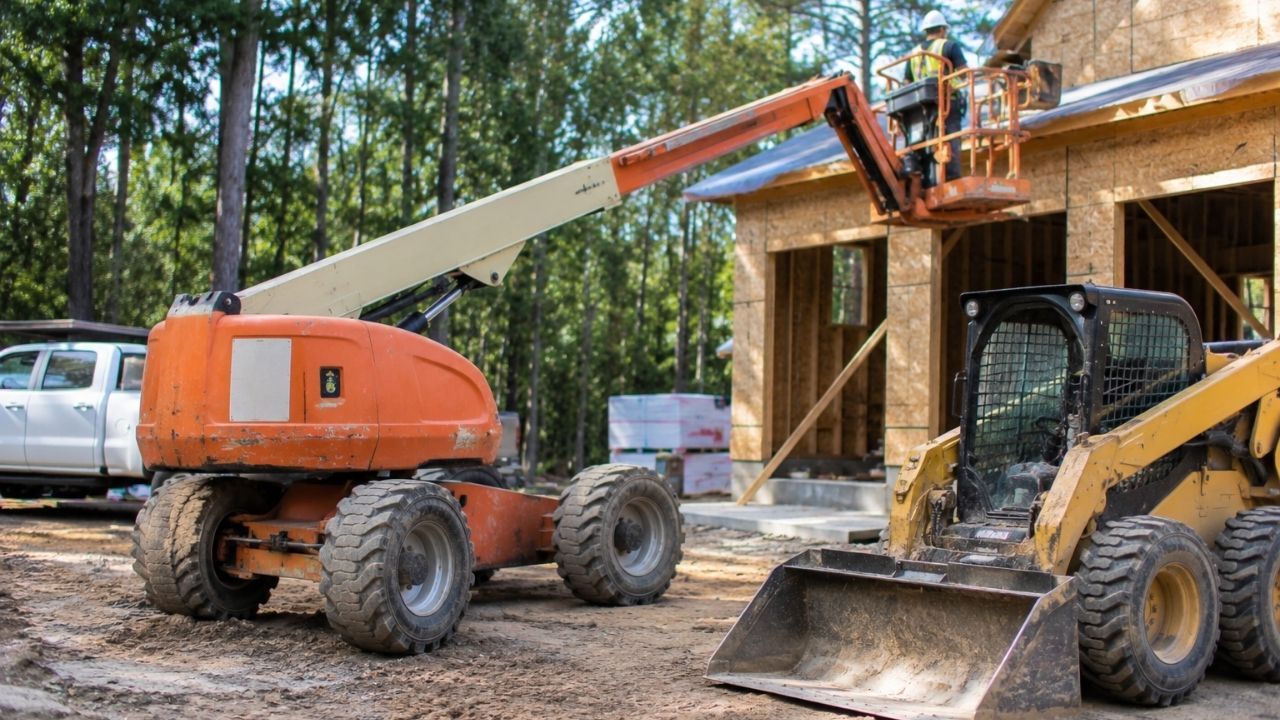
Commercial auto policies define "mobile equipment" separately from autos. Bulldozers, forklifts, skid steers, and similar machines generally aren't covered autos. They're usually picked up for liability under your general liability policy and for physical damage under an inland marine contractor's equipment form.
The practical test is simple: is the item designed for and primarily used on public roads? If yes, it usually belongs on the auto policy. If it mostly lives on job sites and gets hauled from place to place, inland marine is often the better fit.
A grading contractor in Florence offers a clean example. The dump truck and the lowboy trailer go on the auto policy. The excavator riding on that lowboy goes on inland marine. If the trailer crashes, the auto policy handles the trailer and third-party liability, while inland marine pays for damage to the excavator.
The catch is that some items blur the line. A trailer-mounted generator or air compressor might be insured either way, depending on the carrier. Ask for the placement in writing.
Comparison: Commercial Auto vs. Inland Marine Coverage
| Feature | Commercial Auto | Inland Marine |
|---|---|---|
| Best for | Road-going trucks and trailers | Equipment, tools, job-site machinery |
| Liability included | Yes | No (relies on GL) |
| Theft coverage | Only with comprehensive | Usually included |
| Valuation options | ACV or stated amount | ACV, replacement cost, or agreed value |
| Covers cargo/contents | No | Yes, if scheduled |
| Works off-road | Limited | Yes |
Protecting Against Theft and Physical Damage
Trailer theft is a real problem in this state, not a hypothetical. In July 2026, the Florence County Sheriff's Office closed a multi-year investigation that recovered more than $1 million in stolen semis and trailers. Recovered equipment is the lucky outcome. Many stolen trailers get re-plated, stripped, or sold out of state within days.
Comprehensive coverage handles theft, fire, vandalism, hail, and falling trees. Collision handles crashes and rollovers. For a trailer, comprehensive is often the more valuable of the two, since trailers rarely cause collisions on their own but get stolen constantly.
Practical steps that help both your claims and your premium:
- Use hitch and coupler locks: a $40 lock stops most opportunistic theft.
- Install a GPS tracker: some carriers offer credits, and it speeds recovery.
- Record VINs and photos: store them off-site so you can file quickly.
- Park in lit, fenced areas: job-site storage is where most losses happen.
- Remove tools at night: contents usually aren't covered under the auto policy.
That last point catches people constantly. A plumbing business loses an enclosed trailer with a $5,596 pipe threader kit and $3,794 press tools inside. The auto policy pays for the trailer. The tools need a separate inland marine tool floater, or the business eats that loss.
The Impact of Stated Amount vs. Actual Cash Value
Most trailer claims settle on actual cash value: replacement cost minus depreciation. That works fine for a standard utility trailer. It works poorly for a custom concession trailer or a heavily outfitted mobile workshop.
Stated amount coverage lets you list a value up front. The catch is that stated amount usually means the carrier pays the lesser of that figure or ACV, so it caps your recovery rather than guaranteeing it. Agreed value, more common on inland marine forms, actually locks in the payout.
If your trailer has $20,000 in custom upgrades, ask specifically for agreed value. Keep build receipts and photos, and update the scheduled value every year at renewal.
Deductibles and Factors Influencing South Carolina Premiums
Deductibles on trailer physical damage are usually set separately for comprehensive and collision. Raising them lowers your premium, but only up to a point. Choose a number you could pay tomorrow without delaying payroll.
A useful strategy is to split them. Many operators pick a lower comprehensive deductible because theft is the bigger threat, and a higher collision deductible because trailer-only collisions are rare. For a fleet of inexpensive trailers, some owners drop physical damage on the oldest units entirely and self-insure them.
Costs vary widely. In 2026, South Carolina businesses running semi-trucks and trailers typically pay between $8,500 and $14,500 a year in premium. Smaller contractor setups with pickups and utility trailers usually pay much less, while long-haul operators with poor loss history can pay more.
How Trailer Type and Radius of Operation Affect Cost
Underwriters look at what the trailer is and where it goes. These factors move your rate most:
- Trailer type: flatbeds, dumps, reefers, lowboys, and enclosed cargo each carry different loss profiles.
- Value: higher scheduled values raise comprehensive and collision charges.
- Radius: local (under 50 miles) rates lower than intermediate or long haul.
- Garaging location: urban areas around Columbia and Charleston see more theft than rural counties.
- Driver records: a single at-fault crash on a key driver affects the whole fleet.
- Loss history: three years of clean claims is the strongest rate lever you have.
Shop both national carriers and regional insurers that write heavily in the Southeast. Regional carriers sometimes price local contractor fleets more competitively than national brands that focus on long-haul trucking.
Common Questions About South Carolina Trailer Insurance
Most trailer coverage questions come down to three things: does it follow automatically, who pays for theft, and what happens with borrowed or rented equipment. Agents field these every week, and the answers often surprise people who've carried commercial auto for years.
Rented and borrowed trailers deserve a special mention. Your policy may extend some coverage to a trailer you don't own, but physical damage to a rented trailer often requires a hired auto physical damage endorsement. Check before you sign the rental counter waiver.
Frequently Asked Questions for Business Owners
Is my trailer covered if it's attached to my insured truck? Usually for liability, especially small trailers. Physical damage requires you to schedule the trailer.
Does my commercial auto policy cover tools inside my trailer? No. Contents need an inland marine tool or equipment floater.
What if my trailer is stolen from a job site? You're covered only if the trailer has comprehensive coverage on your policy. Report the theft to police right away and send the report to your insurer.
Should I put my skid steer on my auto policy? Generally no. Mobile equipment like skid steers belongs on an inland marine contractor's equipment policy, with liability through general liability.
Do I need to schedule a trailer that's sitting unused in my yard? If you want theft, fire, or storm protection, yes. Some carriers offer lower storage rates for idle units.
Can I lower my premium by raising deductibles? Yes, though savings shrink at higher deductibles. Pick an amount you could pay without straining cash flow.
Making the Right Choice for Your Fleet
Getting trailer and mobile equipment coverage right on a South Carolina commercial policy comes down to a short audit. Pull your declarations page and your equipment list and put them side by side.
- Match every trailer to the policy: confirm each one's VIN, value, and coverage.
- Flag anything over 2,000 pounds of load capacity: make sure it's scheduled.
- Move off-road equipment to inland marine: excavators, skid steers, and generators usually belong there.
- Add a tool floater: cover the contents your trailers carry.
- Revisit valuation: switch custom units to agreed value where you can.
- Set deductibles deliberately: keep comprehensive affordable since theft is the main risk.
The landscaper from the opening fixed his gap in one phone call, after the loss. You can fix yours before one. Spend 30 minutes with your agent this month, walk through every trailer and machine you own, and get written confirmation of where each one is insured. That half hour costs nothing compared to a five-figure claim denial.

Recent posts